ISSN Online
Archives
-

MAFAZA – International Journal of Usuluddin Studies (MIJUS)
Vol. 4 No. 01 (2026)ABOUT THIS ISSUE (VOL. 4, NO. 1, 2026)
This issue features ten scholarly articles that explore a wide range of topics in Islamic studies. Published in three languages -English, Arabic, and Malay- the contributions reflect the journal’s commitment to fostering academic engagement and scholarly exchange across diverse linguistic and intellectual communities. The articles cover several fields of study, including theology, Qur’anic exegesis, Sufism, Islamic political thought, Qur’anic recitations (qirāʾāt), and emerging technologies. Among the topics examined are the role of Sufism in shaping Malay–Nusantara civilization, the authenticity of the Qur’anic wording as divine revelation, Said Nursi’s political philosophy and its relevance to contemporary governance, and the relationship between Qur’anic exegesis and scientific studies through an examination of milk in the Qur’an. The issue also includes studies on the mechanisms of ijtihād in the Risale-i Nur, the contributions of Imam al-Qurṭubī to Islamic theology, the application of artificial intelligence (AI) in teaching the canonical Qur’anic recitations, and the concept of repentance in al-Qushayrī’s Sufi thought. Taken together, these articles reflect the ongoing efforts of contemporary scholars to bridge the rich legacy of Islamic intellectual tradition with the opportunities and challenges of the modern world, thereby contributing to the advancement of Islamic scholarship and its engagement with contemporary academic discourse.
حول هذا العدد (المجلد 4، العدد 1، 2026م)
يضم هذا العدد عشرة بحوث علمية تتناول طيفًا واسعًا من الموضوعات في مجال الدراسات الإسلامية. وقد نُشرت هذه البحوث بثلاث لغات: الإنجليزية والعربية والملايوية، بما يعكس حرص المجلة على تعزيز التواصل العلمي والتفاعل الأكاديمي بين مختلف المجتمعات اللغوية والمعرفية. وتغطي إسهامات هذا العدد عددًا من الحقول العلمية، من أبرزها: العقيدة، وتفسير القرآن الكريم، والتصوف، والفكر السياسي الإسلامي، والقراءات القرآنية، والتقنيات الحديثة. وتتناول الدراسات المنشورة موضوعات متنوعة، منها: دور التصوف في بناء الحضارة الملايوية–الأرخبيلية، وأصالة ألفاظ القرآن الكريم بوصفها وحيًا إلهيًا، وفلسفة سعيد النورسي السياسية وعلاقتها بقضايا الحكم المعاصر، فضلًا عن استكشاف العلاقة بين التفسير القرآني والدراسات العلمية من خلال دراسة اللبن في القرآن الكريم. كما يشتمل العدد على بحوث تتناول آليات الاجتهاد في «رسائل النور»، وإسهامات الإمام القرطبي في علم العقيدة، وتطبيقات الذكاء الاصطناعي في تعليم القراءات القرآنية المتواترة، إلى جانب دراسة مفهوم التوبة عند القشيري في التراث الصوفي الإسلامي. وعمومًا، تعكس هذه البحوث الجهود العلمية المتواصلة للباحثين المعاصرين في ربط التراث الفكري الإسلامي الغني بقضايا العصر ومستجداته، بما يسهم في إثراء المعرفة الإسلامية وتعزيز حضورها في النقاشات الأكاديمية المعاصرة.
-

MAFAZA – International Journal of Usuluddin Studies (MIJUS)
Vol. 1 No. 1 (1)The Mafaza Journal is a biannual international Usuluddin Studies journal, peer-reviewed, published by the publisher of the Sultan Sharif Ali Islamic University (UNISSA), Brunei Darussalam, and managed by the Faculty of Usuluddin. It publishes papers and scholarly studies related to the science of Usuluddin in Malay, English, and Arabic languages. The primary objective of publishing the Mafaza journal is to contribute to the understanding of fundamental aspects and principles in various scholarly fields within Usuluddin studies, such as issues related to Aqīdah and Philosophy, Quranic Readings (Methods of Recitation the Holy Qurʾān), Tafsīr and Ulum al-Qurʾān, Hadīth and Ulum al-Hadīth, Comparative Religion, Da’wah and Community, Sufism and Ethic. Schools of Islamic Theology and - Islamic Contemporary Thoughts Issue’s.
Publication Dates: Jun and December
Mafaza Journal of Usuluddin Studies (MJUS) is available in electronic form in conjunction with the print edition. The on-line version is free to access and download.
-

MAFAZA – International Journal of Usuluddin Studies (MIJUS)
Vol. 3 No. 02 (2025)This issue brings together contemporary studies in the fields of Qur’anic studies, da‘wah, Islamic thought, and current issues, with particular emphasis on technology, maqāṣid al-sharī‘ah, and the preservation of Islamic values. The articles explore the teaching and preservation of qirāʾāt in the era of modern technology in Brunei, Malaysia, and West Sumatra; the application of artificial intelligence in the authentication of Qur’anic manuscripts and in Qur’anic and tafsīr studies; as well as Qur’anic therapy as an alternative approach to healthcare. Issues of da‘wah and intellectual discourse are further examined through analyses of Freemason strategies on social media, Islamic da‘wah in Japan, and the da‘wah dimension in the poetry of Imām al-Shāfiʿī. In addition, this issue presents studies on Islamic ecotheology, including a Prophetic ḥadīth–based perspective on reforestation and a semantic analysis of the concept of al-mīzān in the Qur’an in relation to the preservation of climatic balance. Overall, this edition highlights the continued relevance of Islamic teachings in addressing contemporary global challenges through scholarly approaches grounded in the principle of wasatiyyah (moderation).
-
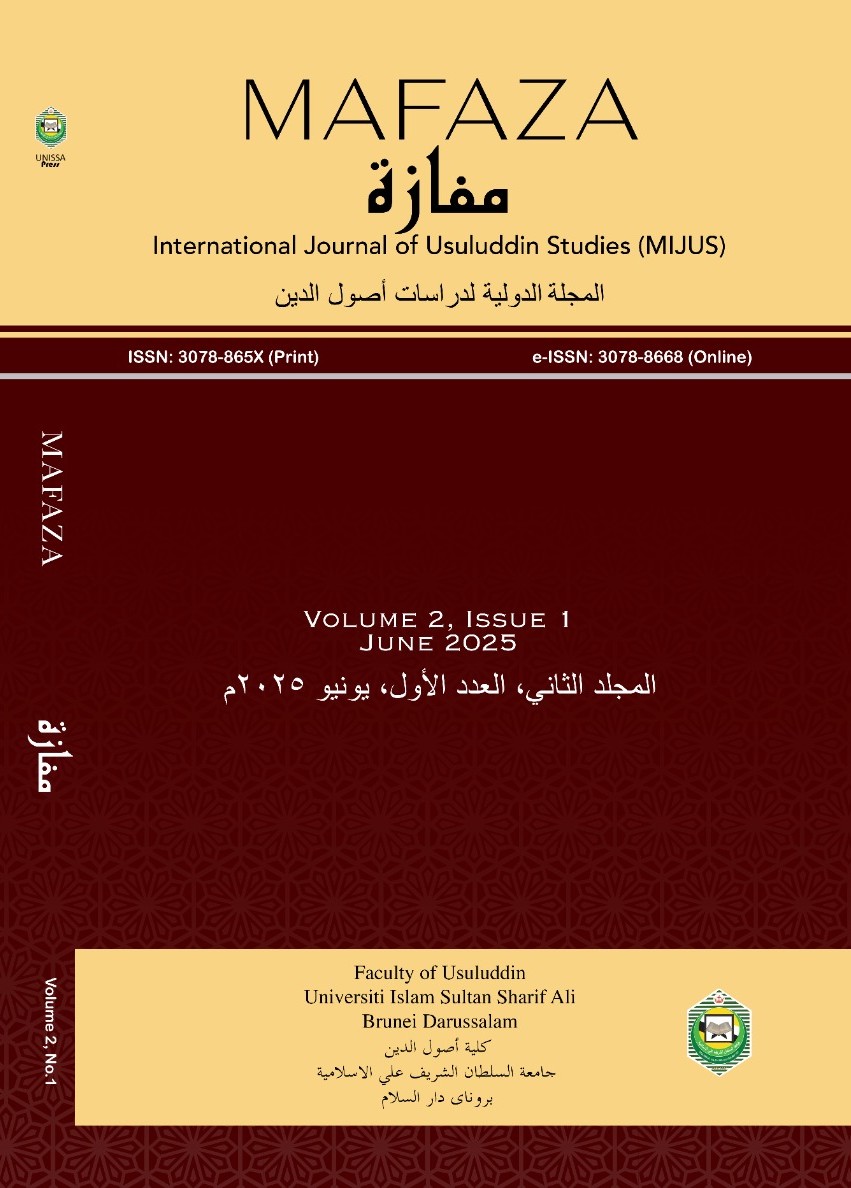
MAFAZA – International Journal of Usuluddin Studies (MIJUS)
Vol. 2 No. 1 (2025)The Mafaza Journal is a biannual international Usuluddin Studies journal, peer-reviewed, published by the publisher of Sultan Sharif Ali Islamic University (UNISSA), Brunei Darussalam, and managed by the Faculty of Usuluddin (FOU). It publishes papers and scholarly studies related to the science of Usuluddin in Malay, English, and Arabic languages. The primary objective of publishing the Mafaza journal is to contribute to the understanding of fundamental aspects and principles in various scholarly fields within Usuluddin studies, such as issues related to Al-Aqīdah and Philosophy, Quranic Readings (Methods of Recitation of the Holy Qurʾān), Tafsīr and Ulum al-Qurʾān, Hadīth and Ulum al-Hadīth, Comparative Religion, Da’wah and Community, Sufism and Ethics. Schools of Islamic Theology and - Islamic Contemporary Thoughts Issues.